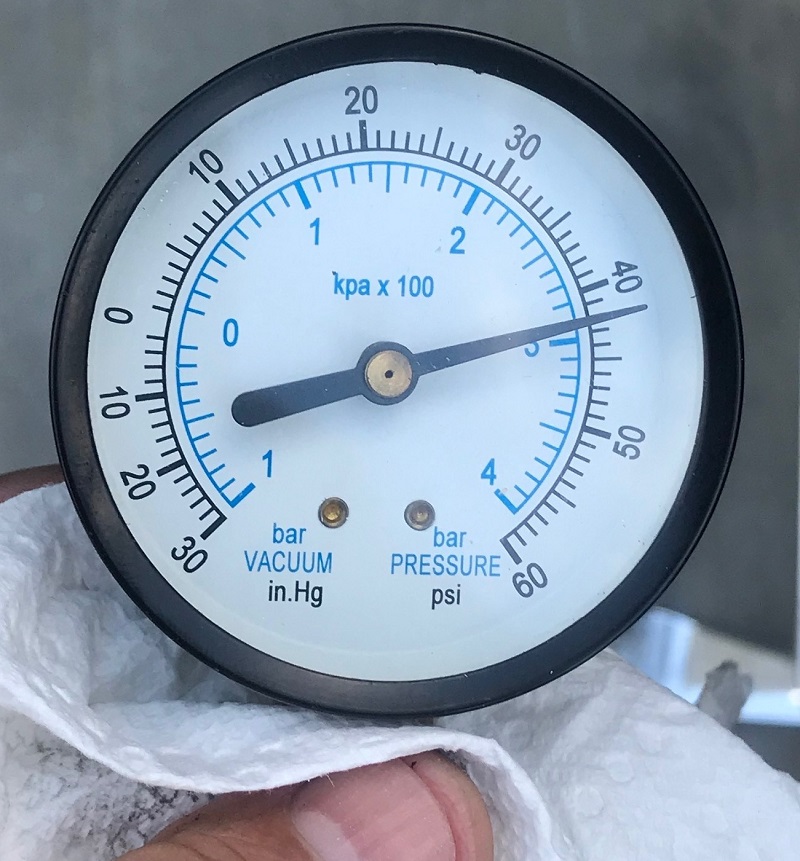
I took these pictures just now. Total time to test this pump was less than ten minutes. You really do need a pressure gauge to test this properly.
I don't want to knock your HD guy but, I have known lots of mechanics who don't understand fuel injection and make very common mistakes. Trust that he did the work properly but, verify by testing as shown below.
He may have connected the pump wires backward. He may not have understood where all the O-rings go. You just don't know. The computer does absolutely nothing with the pump except turn it on or off. It is on when the engine is running. That's all you need to verify electrically.
Disconnect the fuel line on the bottom of the tank.
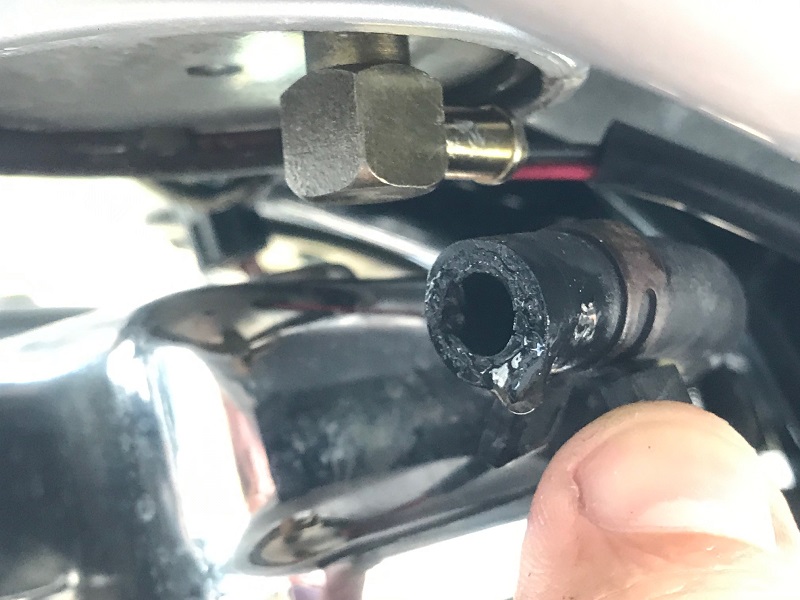
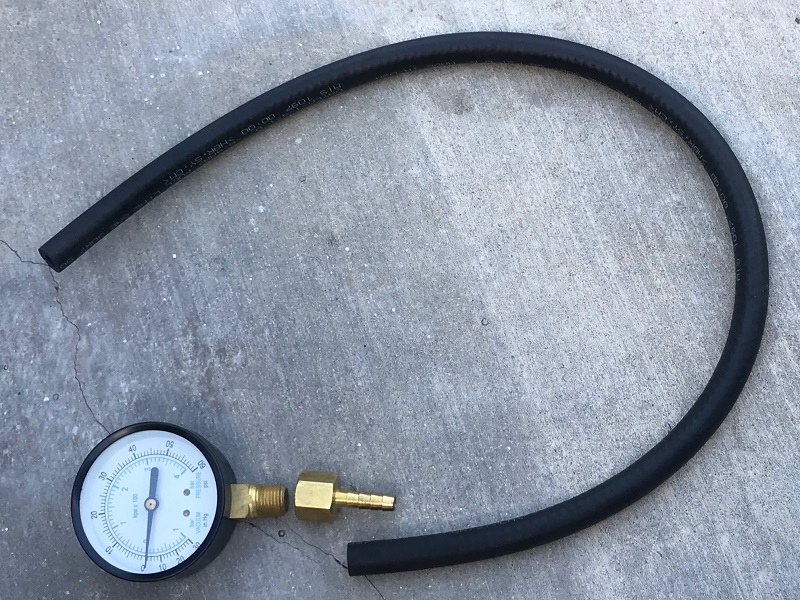
Assemble the pressure gauge, barb fitting and rubber hose. Connect this to the metal fitting on the bottom of the gas tank. I didn't even use clamps. Friction was enough to hold the rubber hose in place.
Turn on the key. You should be able to hear the fuel pump and the gauge should immediately show pressure. This one got to three bar while the pump was running. After the priming time is over, the pump will stop and the pressure may drop some. It should not go to zero quickly. It should be able to hold pressure for a minute or more. When the engine is running, the pump runs continuously. The number you see while the pump is priming is the pressure you want to know. This bike has 3.0 bar of pressure when the pump is on. That's a little low but, acceptable. I rode this bike 470 miles on Saturday.